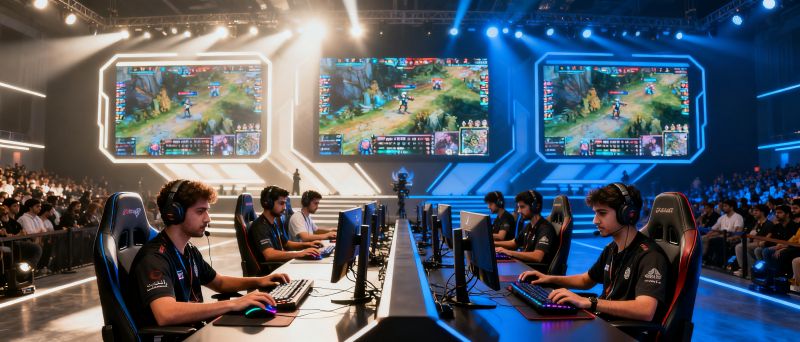
he EWC Schedule is not for the faint of heart. The 2024 Esports World Cup in Riyadh packed 22 tournaments into eight weeks, and the daily lineup read like a logistical fever dream. I watched the opening weekend from a hotel room in Dubai, juggling three streams at once—Dota 2 group stage on one screen, Counter-Strike 2 qualifiers on another, and the Tekken 8 bracket on a tablet propped against a coffee cup. By hour six, my eyes burned. That’s the EWC Schedule in a nutshell: relentless。overlapping, and designed for viewers who thrive on chaos.What stood out wasn’t just the volume but the pacing. The EWC Schedule front-loaded team esports in July—League of Legends, Mobile Legends, and Dota 2 ran nearly back-to-back—while August leaned into fighting games and individual events like Street Fighter 6 and EA FC 24. A friend who covered the event in person told me the venue’s practice area was a revolving door of players sprinting between stations. “You’d see a Valorant pro warming up next to a PUBG Mobile team, and neither had any idea who the other was” she said. That’s the odd beauty of the EWC Schedule: it forces cross-pollination between scenes that rarely share a stage.From a viewer’s perspective, the EWC Schedule had clear winners and losers. The midday slots (Riyadh time) often featured lower-profile titles。and those streams pulled modest numbers—understandable when European and American audiences were still asleep. Prime-time slots, predictably, went to CS2 and League of Legends. One evening I tuned into a Tekken 8 match that started at 9 p.m. local time and ended past midnight;the chat was a mix of insomniacs and dedicated fighting game fans. The schedule didn’t cater to them equally, but it didn’t ignore them either. That’s a delicate balance, and the EWC Schedule mostly stuck the landing—though the 2 a.m. grand finals for a few regional qualifiers felt like a misstep.Players felt the crunch too. A source close to one of the competing Dota 2 squads mentioned that their EWC Schedule had them playing a best-of-three at 11 a.m., then a best-of-five the same evening. “We had four hours of sleep and a Bo5 to prep for” he said, half-laughing. “That’s not an excuse—everyone dealt with it—but it changes how you draft” That kind of granular detail rarely makes headlines。
yet it’s exactly what the EWC Schedule demanded: adaptability over comfort. The event’s $60 million prize pool justified the grind for most, but I’d argue the schedule itself became a meta-factor. Teams that managed rest and scrim time intelligently—rather than just grinding ranked—had a visible edge in later rounds.Looking ahead, the EWC Schedule will likely evolve. The 2024 edition proved the concept works, but the overlaps were brutal for completionists. A few organizers I spoke with hinted at staggering finals more evenly across weekends next year. Whether that happens is anyone’s guess. For now, the EWC Schedule stands as a bold experiment: eight weeks of esports that felt like a marathon sprinted in intervals. Exhausting?Absolutely. But I’d be lying if I said I didn’t miss the daily scramble the moment it ended.